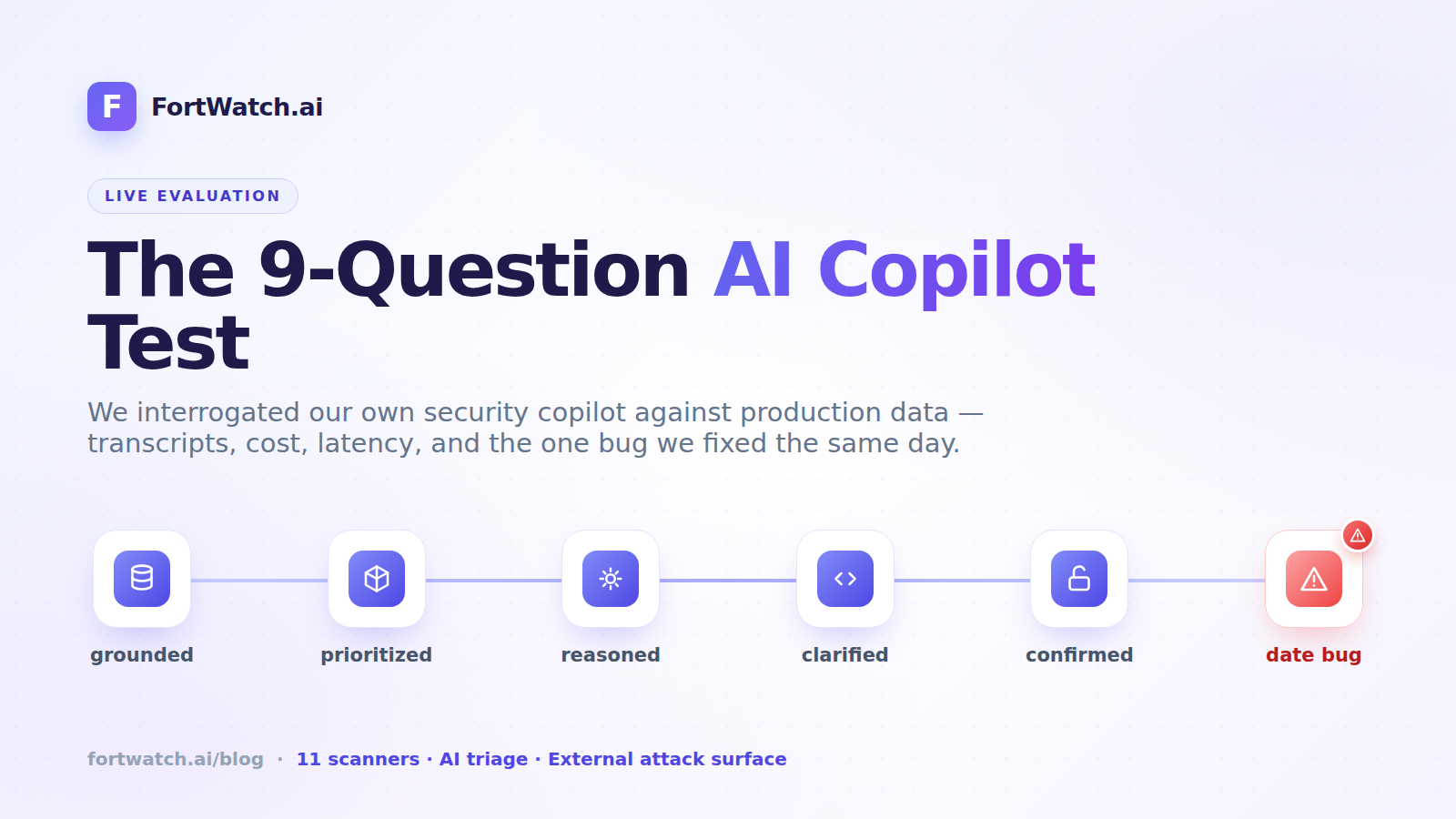
How to Evaluate an AI Security Copilot: The 9-Question Live Test We Ran on Our Own Platform
We interrogated FortWatch AI against our own production workspace and published everything — transcripts, cost, latency, and the one failure we disclosed.
Vulnerability management guides, AI-first defense strategies, and practical security advice for teams that ship fast.

We interrogated FortWatch AI against our own production workspace and published everything — transcripts, cost, latency, and the one failure we disclosed.

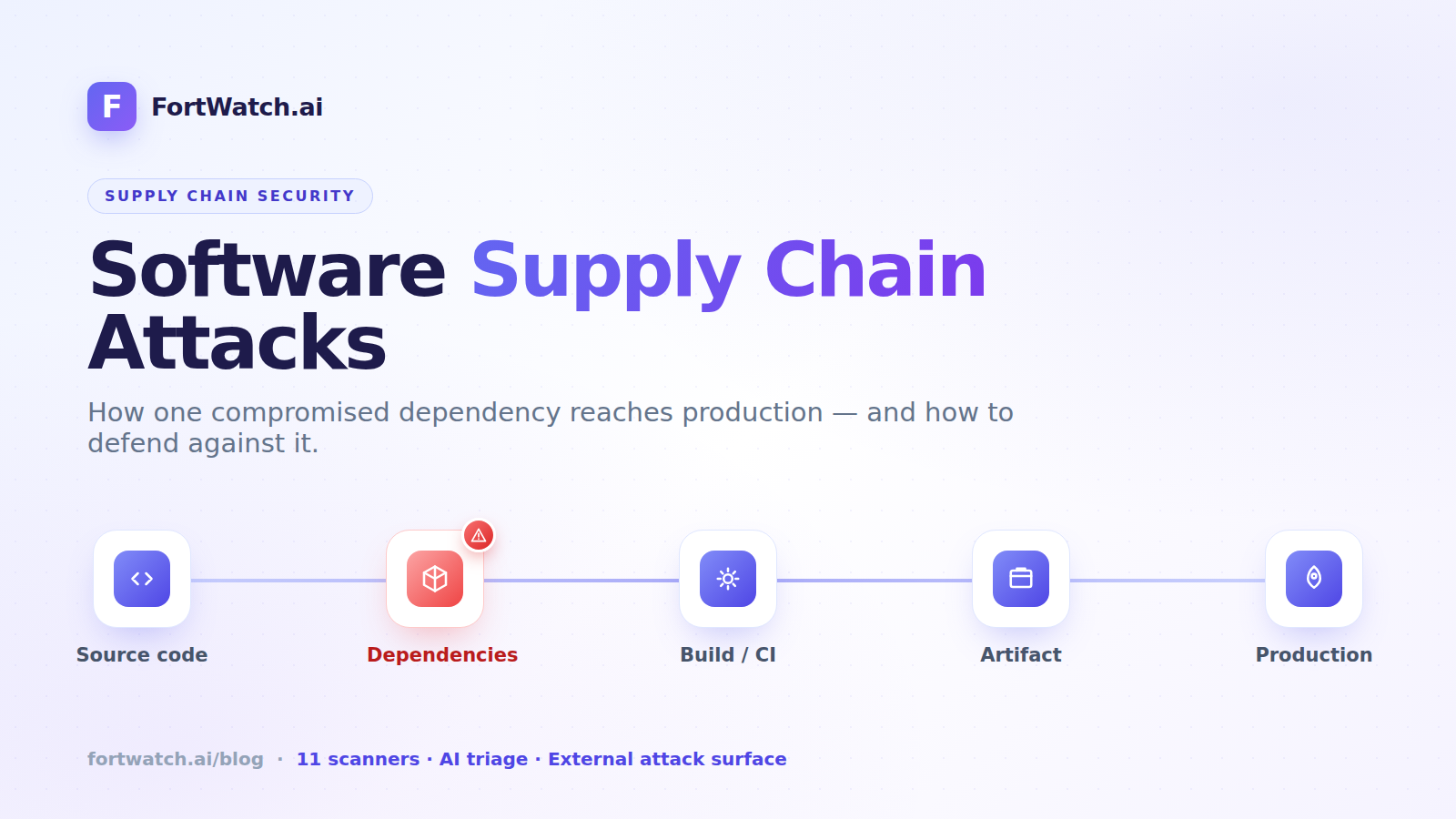
SolarWinds, XZ Utils, dependency confusion, the 2025 npm token worms: how supply chain attacks work, each mapped to the exact defense that stops it.

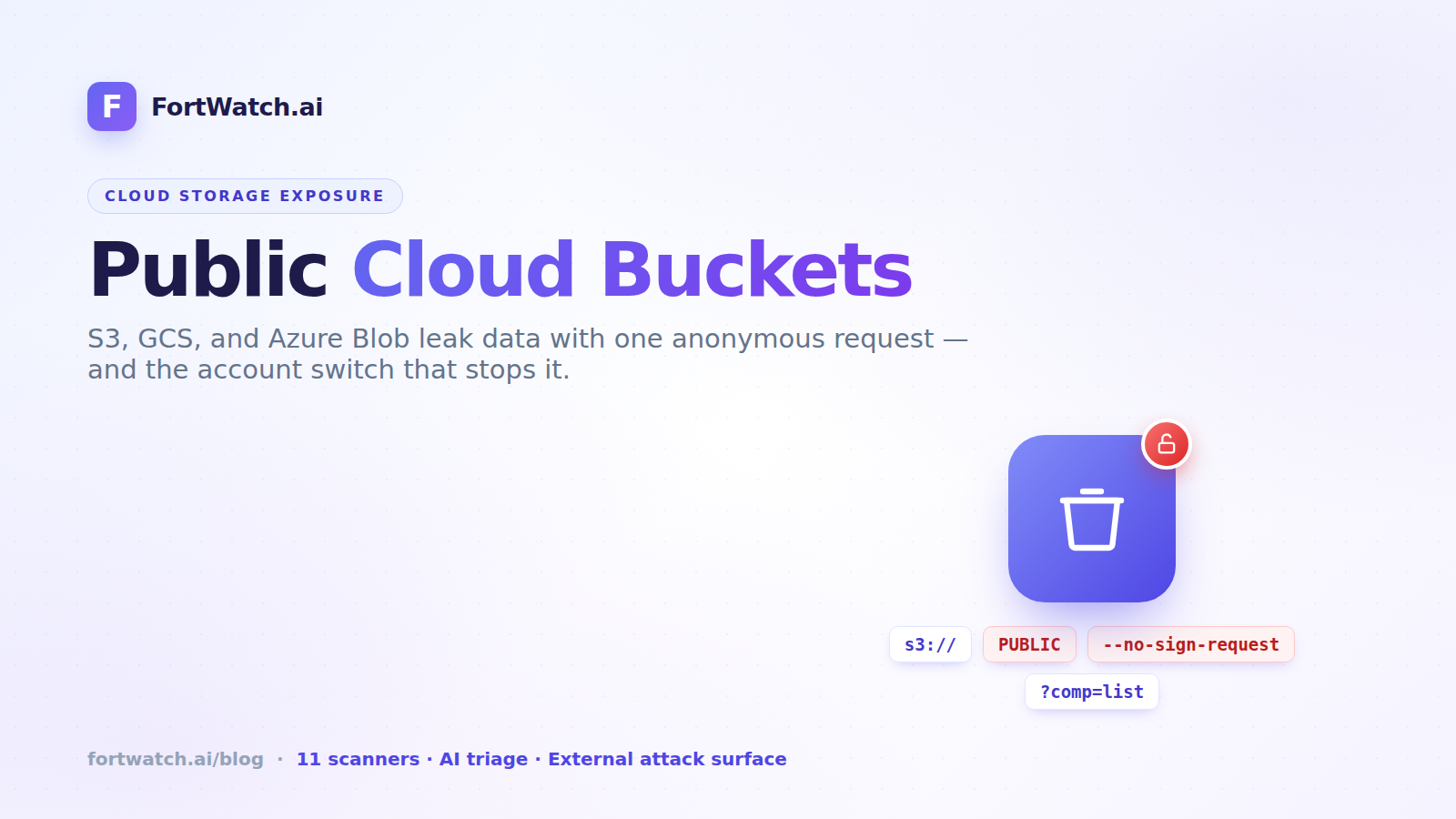
A single anonymous request can dump an entire bucket — no exploit, no credential. Here's how object storage goes public across S3, Azure Blob, and GCS, and the account-level kill switch that shuts it down.

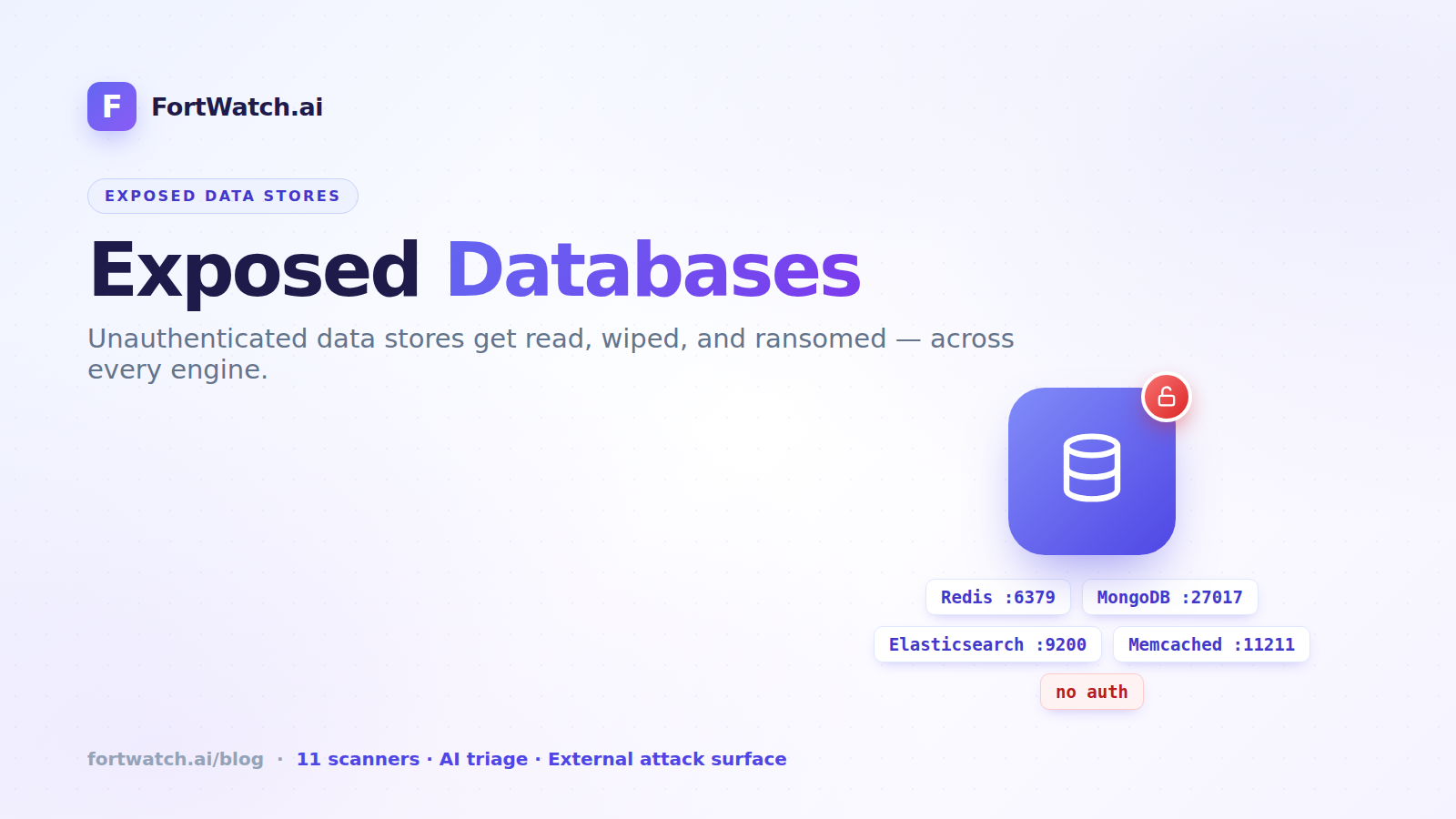
An open, unauthenticated MongoDB, Elasticsearch, Redis, Memcached, CouchDB, etcd, or Cassandra port is the cleanest CRITICAL in external security — full read, full delete, often host RCE, using the product's own commands. How attackers find them in seconds, and how to close them.

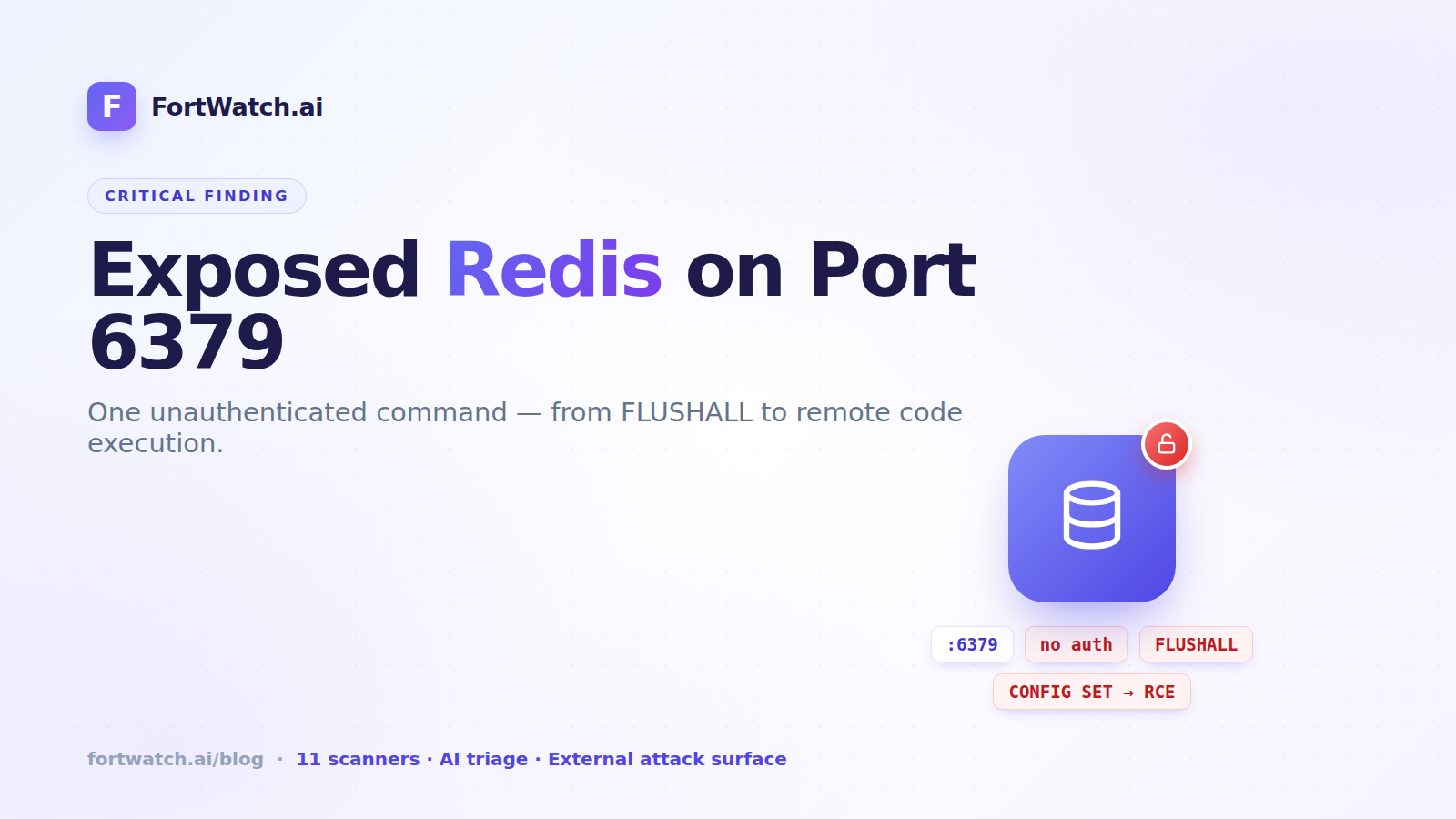
An open Redis port 6379 isn't a config nit for the backlog — it's a critical finding. Censys counted 39,405 unauthenticated instances, roughly half already showing compromise attempts, and Wiz's 2025 sweep found ~60,000. Here's the attacker playbook and a copy-pasteable hardening checklist.
Every EASM vendor's homepage looks the same. Here's the framework we use to compare them honestly — what to ask, what to test, and what to ignore.
An exposed .env file at your web root is a credential dump waiting to be indexed. Here's why this keeps shipping to production and how to detect it.
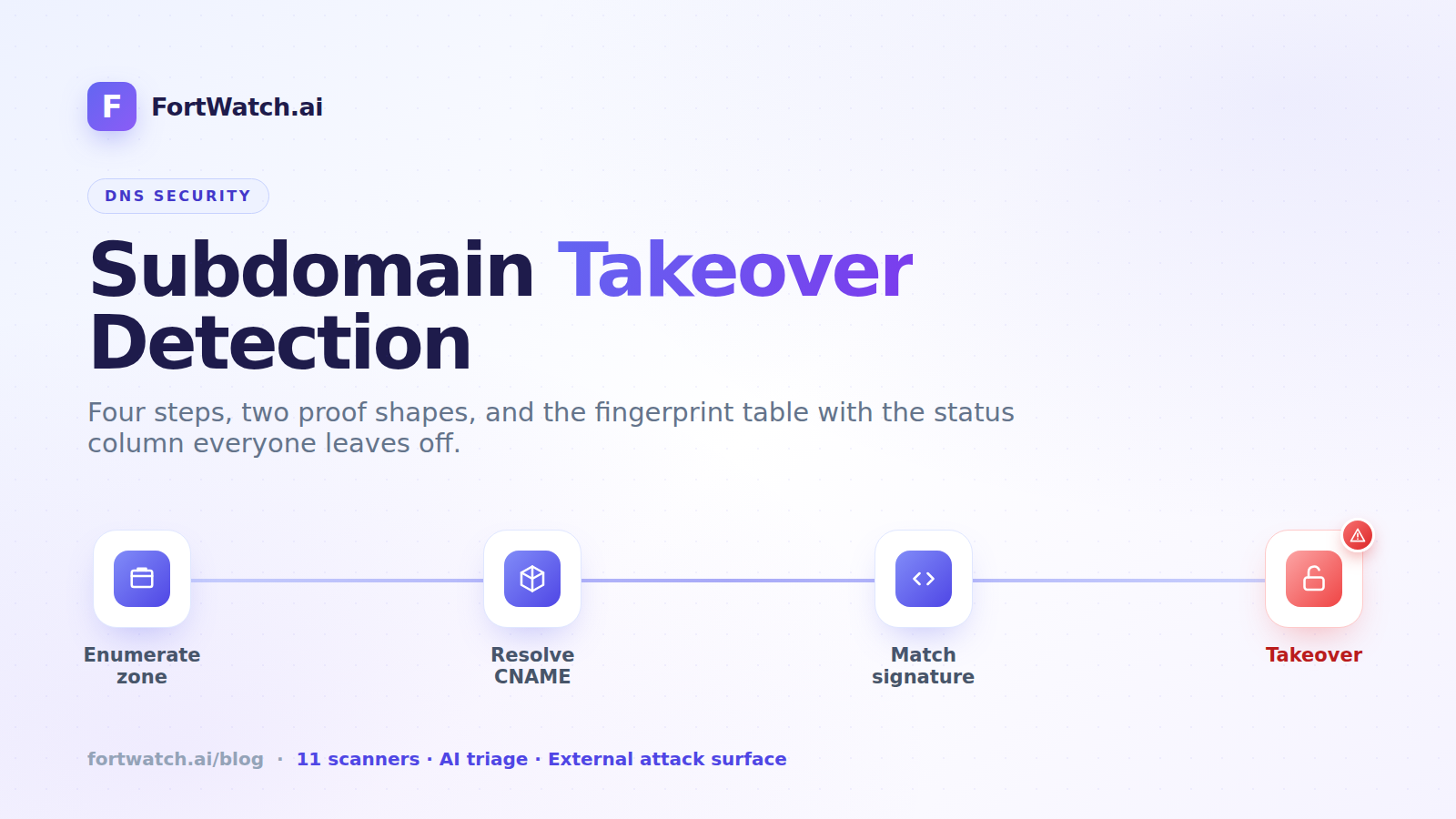
A dangling CNAME pointing at a deprovisioned cloud service is a one-click takeover for whoever claims the resource next. Here's how it happens and how to catch it.

Most security vendors bolt AI on as a chatbot. AI-first means AI triages, explains, and prioritizes every finding automatically — not on demand.

Small teams ship real products on real infrastructure but get priced out of the tools that protect them. The gap between shipped and secured is widening.

That staging server from last year's project? The subdomain a contractor set up? Shadow IT creates blind spots that attackers love to exploit.

Annual penetration tests leave 364 days of blind spots. Here's why continuous automated scanning is the foundation of a modern security program.
Start scanning in under 5 minutes. No credit card required. 14-day free trial included.