EPSS vs CVSS vs CISA KEV: The Patch-First Rule a Five-Person Team Can Run
CVSS says how bad a bug could be, not whether anyone is exploiting it. How EPSS and the CISA KEV catalog fix that — with real CVEs and a rule you can run.
Vulnerability management guides, AI-first defense strategies, and practical security advice for teams that ship fast.

CVSS says how bad a bug could be, not whether anyone is exploiting it. How EPSS and the CISA KEV catalog fix that — with real CVEs and a rule you can run.

Someone can register a domain that looks like yours in ninety seconds. It needs no exploit and no misconfiguration on your side — and every scanner pointed at your own infrastructure will report clean while it happens.

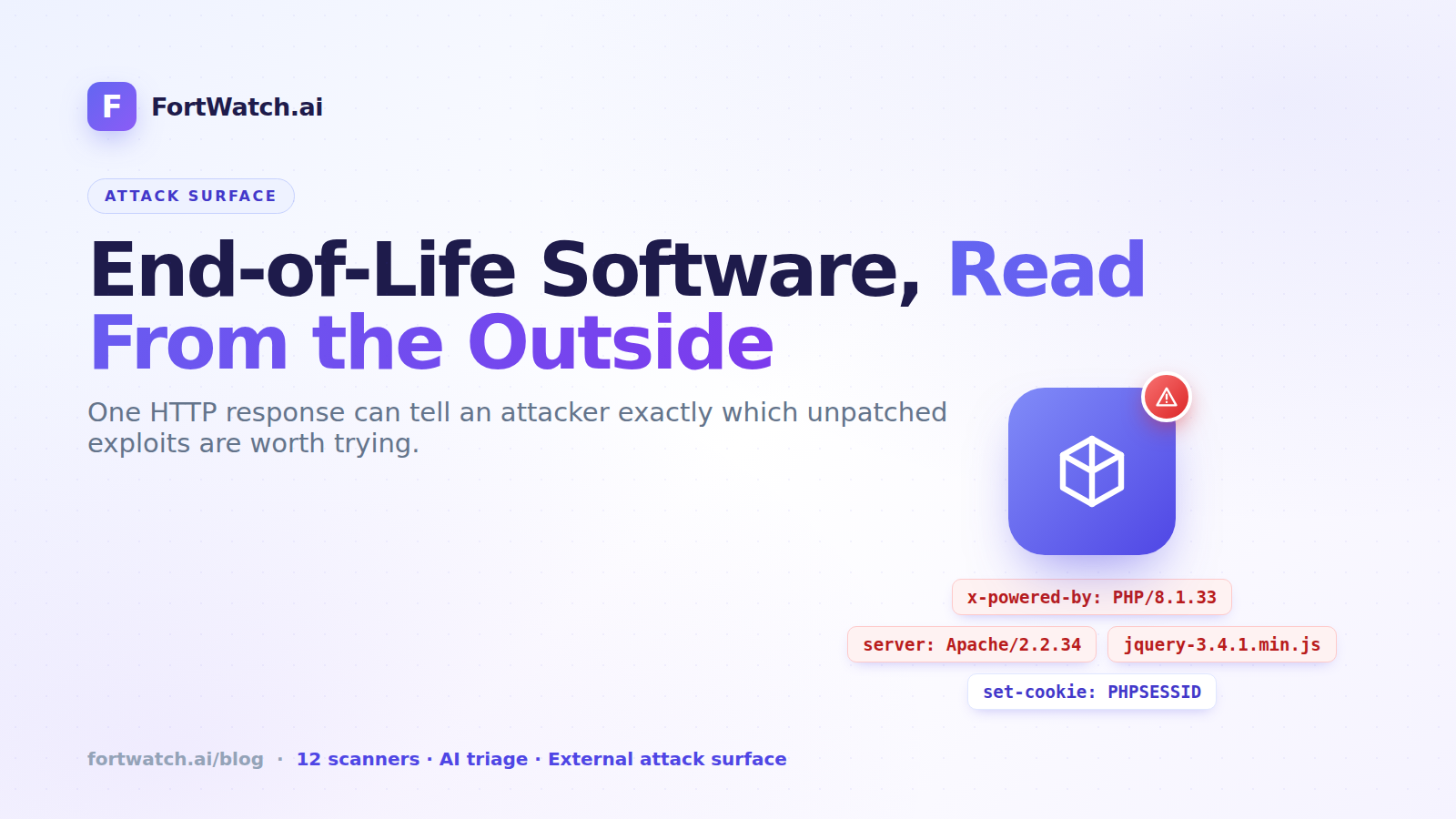
An end-of-life runtime is a vulnerability you can read straight off an HTTP response. What actually leaks a version, why EOL is not the same as outdated, and how to check your own hosts.

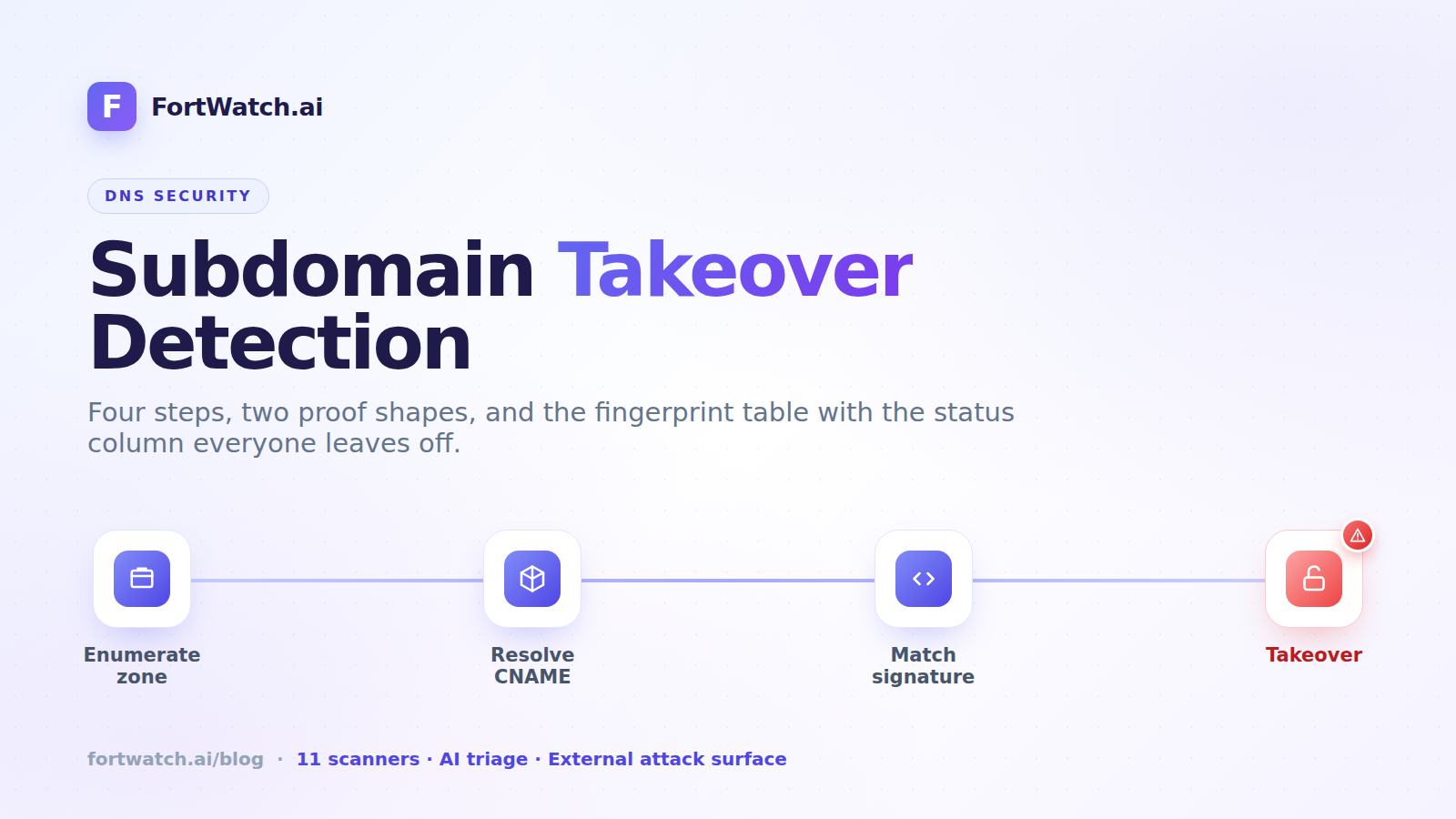
Most subdomain takeover fingerprint lists have rotted. Here is the four-step detection loop, the NS and MX variants, and a provider table with a status column.

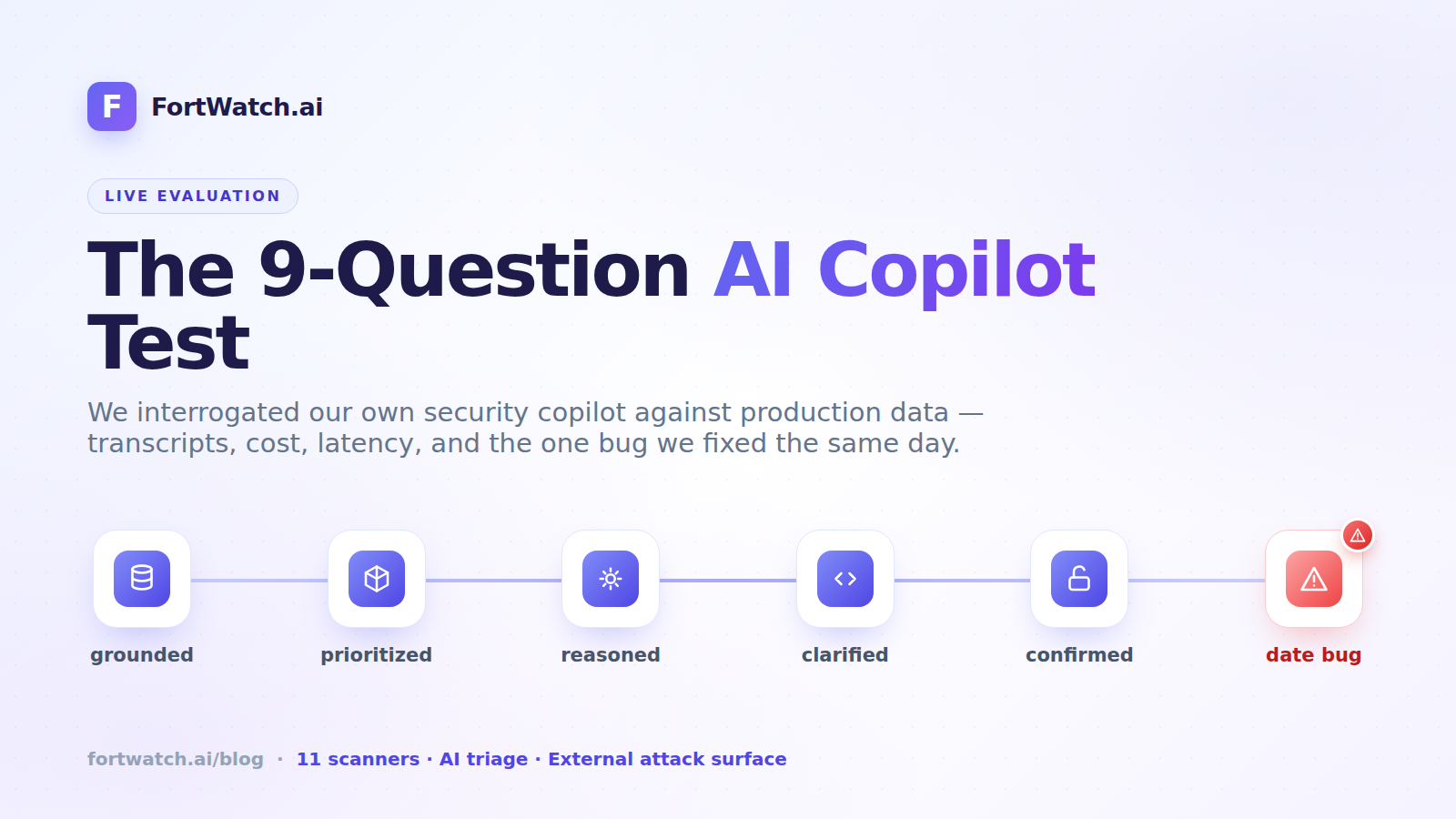
We interrogated FortWatch AI against our own production workspace and published everything — transcripts, cost, latency, and the one failure we disclosed.

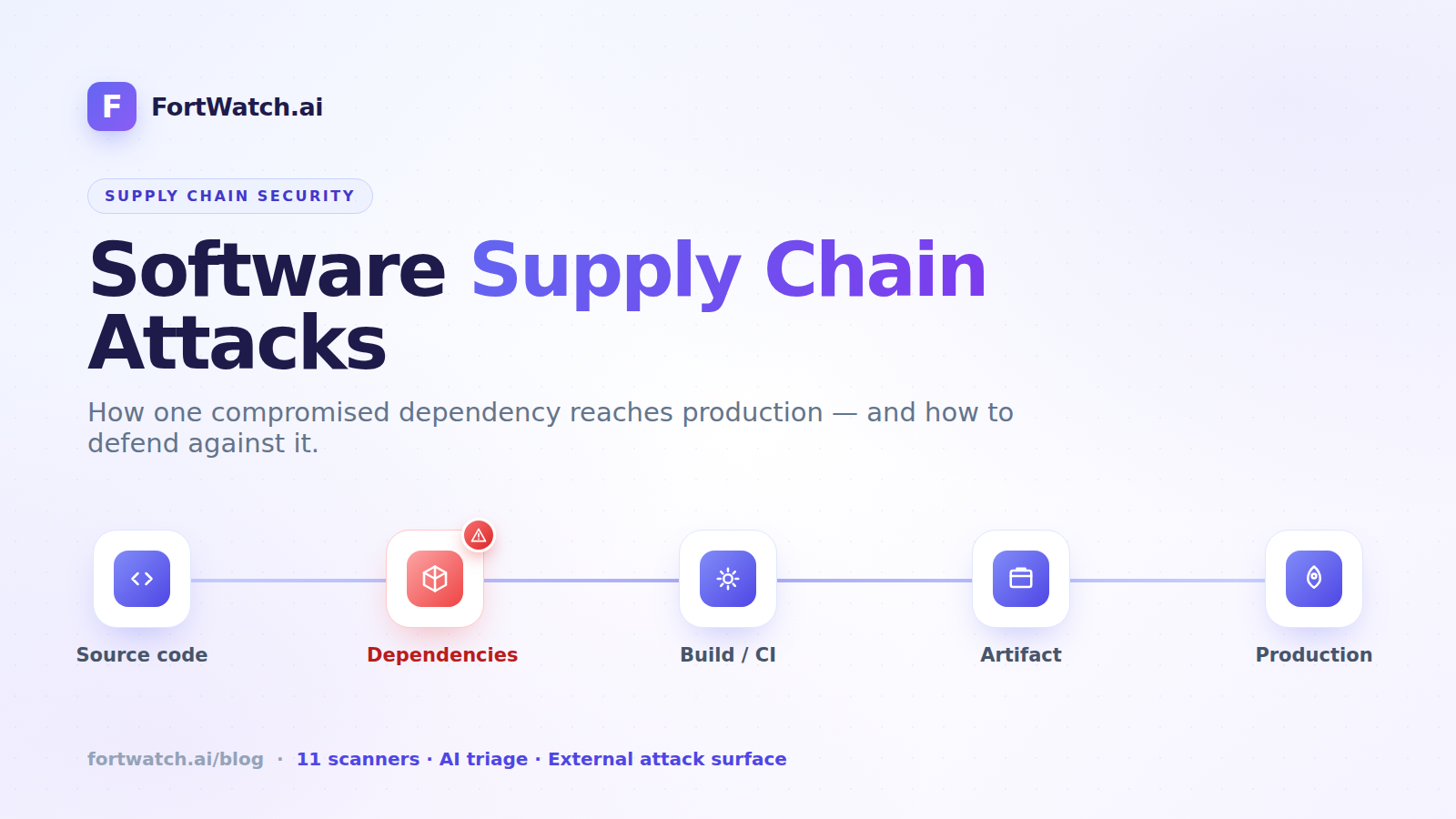
SolarWinds, XZ Utils, dependency confusion, the 2025 npm token worms: how supply chain attacks work, each mapped to the exact defense that stops it.

A single anonymous request can dump an entire bucket — no exploit, no credential. Here's how object storage goes public across S3, Azure Blob, and GCS, and the account-level kill switch that shuts it down.

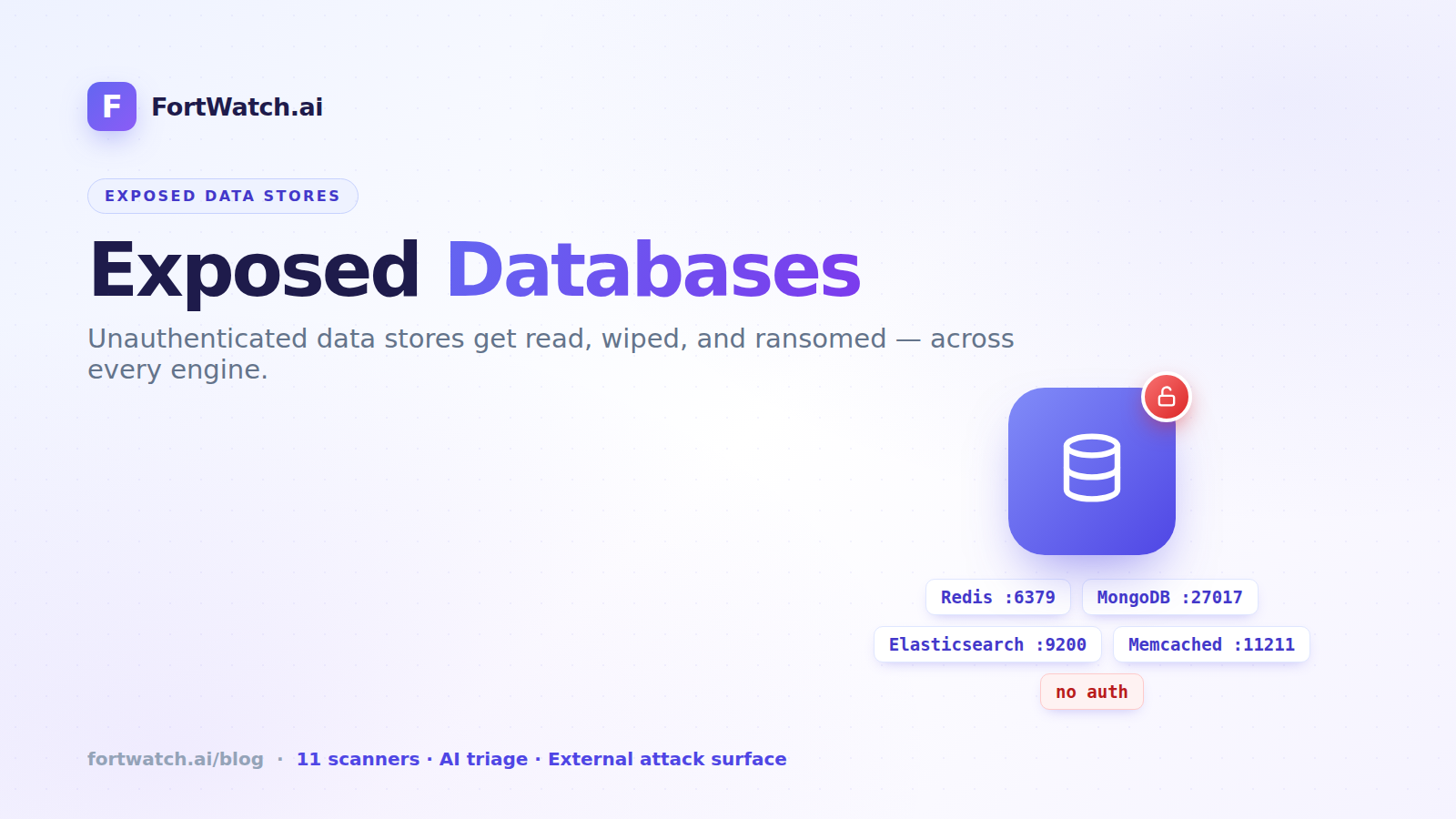
An open, unauthenticated MongoDB, Elasticsearch, Redis, Memcached, CouchDB, etcd, or Cassandra port is the cleanest CRITICAL in external security — full read, full delete, often host RCE, using the product's own commands. How attackers find them in seconds, and how to close them.

An open Redis port 6379 isn't a config nit for the backlog — it's a critical finding. Censys counted 39,405 unauthenticated instances, roughly half already showing compromise attempts, and Wiz's 2025 sweep found ~60,000. Here's the attacker playbook and a copy-pasteable hardening checklist.
Every EASM vendor's homepage looks the same. Here's the framework we use to compare them honestly — what to ask, what to test, and what to ignore.
An exposed .env file at your web root is a credential dump waiting to be indexed. Here's why this keeps shipping to production and how to detect it.
A dangling CNAME pointing at a deprovisioned cloud service is a one-click takeover for whoever claims the resource next. Here's how it happens and how to catch it.
Start scanning in under 5 minutes. No credit card required. 7-day free trial included.